The Vetiver Voice
Vetiver Grass: Transforming Soil Conservation into Women-Led Green Enterprises
By Jacob Jose
Manager, PDS Organic Spices
Peermade Development Society (PDS), Idukki, Kerala
The Ecological Challenge and a Natural Solution
A Fragile Ecosystem Under Pressure
The Western Ghats, one of the world’s most treasured biodiversity hotspots, is home to a delicate and complex agro-ecosystem. In the high ranges of Idukki district, agriculture is deeply intertwined with nature. However, this relationship is increasingly under strain.
Undulating terrains, intense monsoons, and changing climate patterns have led to severe soil erosion, runoff, and fertility loss. For small and marginal farmers, this is not just an environmental concern—it is a direct threat to their livelihoods. The loss of topsoil reduces productivity, destabilizes farming systems, and increases vulnerability to climate uncertainties.
Soil, often overlooked, is the foundation of agricultural sustainability. It plays a vital role in carbon sequestration, water retention, nutrient cycling, and biodiversity support. When soil health deteriorates, the entire agricultural value chain weakens.
Recognizing this, Peermade Development Society (PDS), through its PDS Organic Spices initiative, began exploring solutions that are both ecologically sound and economically viable.
Peermade Development Society (PDS) is a non-governmental organization established in 1980 in Idukki district, Kerala, dedicated to the sustainable development of tribal communities, small and marginal farmers, women, and rural poor. Through community-based and participatory approaches, PDS implements initiatives in organic agriculture, livelihood promotion, healthcare, education, and environmental conservation. By integrating ecological sustainability with economic empowerment, PDS continues to play a pivotal role in strengthening rural livelihoods and preserving the fragile ecosystem of the Western Ghats.
Vetiver: A Grass with Extraordinary Potential
Among the various interventions, one stood out for its simplicity and effectiveness—Vetiver grass (Chrysopogon zizanioides), a native species to South India
Vetiver is uniquely suited for soil and water conservation due to its remarkable characteristics:
- A deep root system extending up to 3–4 meters vertically
- Strong fibrous roots that bind soil firmly
- High tolerance to drought, flooding, and extreme weather
- Ability to slow down runoff and trap sediments
Unlike many grasses, Vetiver does not spread horizontally, making it easy to manage and ideal for contour planting. When planted in rows across slopes, it forms dense hedges that act as natural barriers, significantly reducing soil erosion.
Field observations and studies have shown that Vetiver hedges can dramatically reduce runoff and soil loss while improving water infiltration. Over time, this contributes to increased soil organic carbon, better moisture retention, and improved crop productivity.
Soil Health, Climate Resilience, and Sustainable Farming
Building Soil for the Future
Healthy soil is central to addressing climate change and ensuring food security. It acts as both a carbon sink and a buffer against climate variability. PDS Organic Spices has consistently promoted regenerative agricultural practices that focus on restoring soil biodiversity rather than merely enhancing fertility.
Key soil management practices include:
- Organic manuring and composting
- Multi-cropping and cover cropping
- Water conservation and efficient irrigation
- Agroforestry and biodiversity enhancement
The integration of Vetiver into this system strengthens these efforts by stabilizing soil, reducing nutrient loss, and enhancing the soil’s capacity to retain water.
Climate Change Mitigation Through Vetiver
The role of Vetiver goes beyond erosion control. Its deep root system contributes significantly to carbon sequestration. By capturing atmospheric carbon and storing it within the soil profile, Vetiver supports long-term climate mitigation.
Additionally, improved soil structure and moisture retention helps farmers adapt to irregular rainfall patterns, droughts, and extreme weather events.
In essence, Vetiver serves as both a climate mitigation and adaptation tool, making it highly valuable in the context of sustainable agriculture.
Traditional Knowledge Meets Modern Application
Interestingly, Vetiver has long been part of traditional farming systems in the Western Ghats. Farmers historically used it as a natural barrier against erosion. PDS Organic Spices revived and strengthened this indigenous practice by integrating it into a structured and scalable model.
Vetiver slips are propagated in PDS nurseries and distributed to farmers, along with training on contour planting and maintenance. This ensures widespread adoption and long-term impact.
Women at the Centre of Green Innovation
Addressing Gender Gaps in Agriculture
In many rural communities, women play a crucial role in farming activities. Yet, they often remain economically dependent and underrepresented in decision-making processes. Land ownership, access to training and financial independence are typically limited.
PDS Organic Spices recognized this gap and sought to create opportunities that would actively involve women in the agricultural value chain—not just as laborers, but as entrepreneurs.
From Grass to Craft: A New Opportunity
While Vetiver roots are widely used in Ayurvedic medicine, perfumery, and aromatherapy, its leaves were largely underutilized. This presented an opportunity to create value-added products.
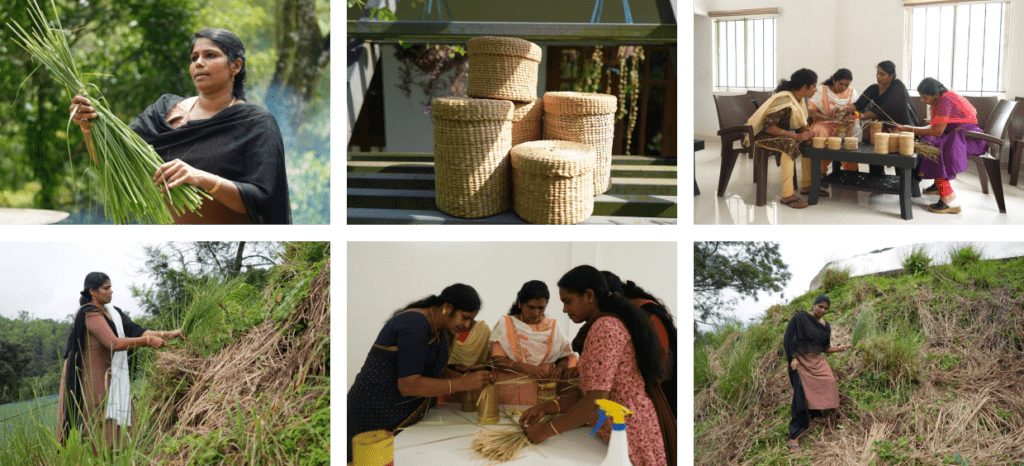
PDS initiated a Vetiver-based women micro-enterprise, focusing on the production of eco-friendly gift boxes and handicrafts using Vetiver leaves.
To build technical capacity, expert trainers were brought in to conduct intensive skill development programs. Women were trained in:
- Processing and preparing Vetiver leaves
- Weaving techniques for basket making, and
- Designing and finishing eco-friendly products
What began with 25 women soon evolved into a structured enterprise.
The Rise of “Karunya” Group
The trained women formed a Joint Liability Group named “Karunya”, establishing a strong institutional framework. Over time, they:
- Refined their craftsmanship through continuous practice
- Participated in national and international exhibitions
- Conducted peer training for new members
- Built leadership and financial management skills
A dedicated craft centre was established, enabling systematic production and quality control.
Today, the group stands as a model of collective entrepreneurship, demonstrating how skill development and institutional support can transform livelihoods.
Ecolo-Economisation and the Road Ahead
Creating Sustainable Value Chains
The Vetiver initiative exemplifies the concept of “Ecolo-Economisation”—where ecological actions are transformed into economic opportunities.
The handcrafted Vetiver baskets serve as:
- Sustainable packaging for organic spices
- Eco-friendly alternatives to plastic and synthetic materials
- Unique products for gifting and tourism markets
These products are now used in:
- Organic and natural product stores
- Corporate gifting
- Tourism and hospitality sectors
- National and international exhibitions
By linking production to markets, PDS Organic Spices ensures consistent demand and fair income for the women artisans.
Economic Impact and Livelihood Enhancement
The micro-enterprise has created tangible economic benefits:
- Each artisan earns approximately ₹3000–3500 per month
- Flexible work allows women to balance household responsibilities
- Increased financial independence enhances social status
In addition, local farmers benefit by supplying Vetiver leaves, creating a circular and inclusive value chain.
Recognition and Expansion
The success of the initiative has gained international recognition, including a micro-entrepreneurship award from Paris. More importantly, it has inspired expansion:
- New women members are continuously trained
- Product lines are being diversified
- Market linkages are being strengthened
The model is scalable and adaptable, offering potential for replication in other regions.
Learning to Read the Land
Not every early decision worked out as planned. Vetiver was initially planted inland across the farm, creating dense bushy corridors throughout the fields. But these thick interior hedges turned out to be ideal habitat for snakes and mongooses — a serious problem for the poultry that Geetha was also raising. The wildlife, attracted by the cover and the chickens, became a recurring challenge.
The solution was adaptive: move the vetiver from the interior to the farm’s perimeter fences. This preserved all the ecological benefits — erosion control, soil improvement, microclimate regulation — while removing the conflict with the poultry. It was a small but important lesson: working with nature means paying attention and being willing to change course.
Conclusion: A Holistic Model of Sustainability
The Vetiver-based women micro-enterprise is more than a development initiative—it is a holistic model that integrates:
- Ecological sustainability through soil conservation and biodiversity restoration
- Economic viability through value addition and market linkage
- Social equity through women empowerment and community participation
It reflects a powerful vision: that environmental conservation and human development are not separate goals, but interconnected pathways.
As agriculture faces increasing challenges from climate change, such innovative and inclusive approaches offer a way forward—where communities thrive by working in harmony with nature.
Success Stories
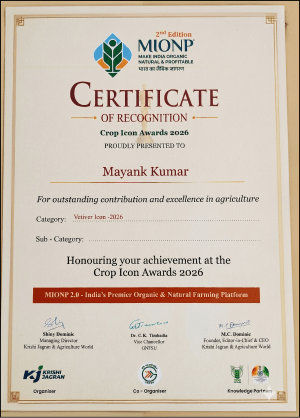
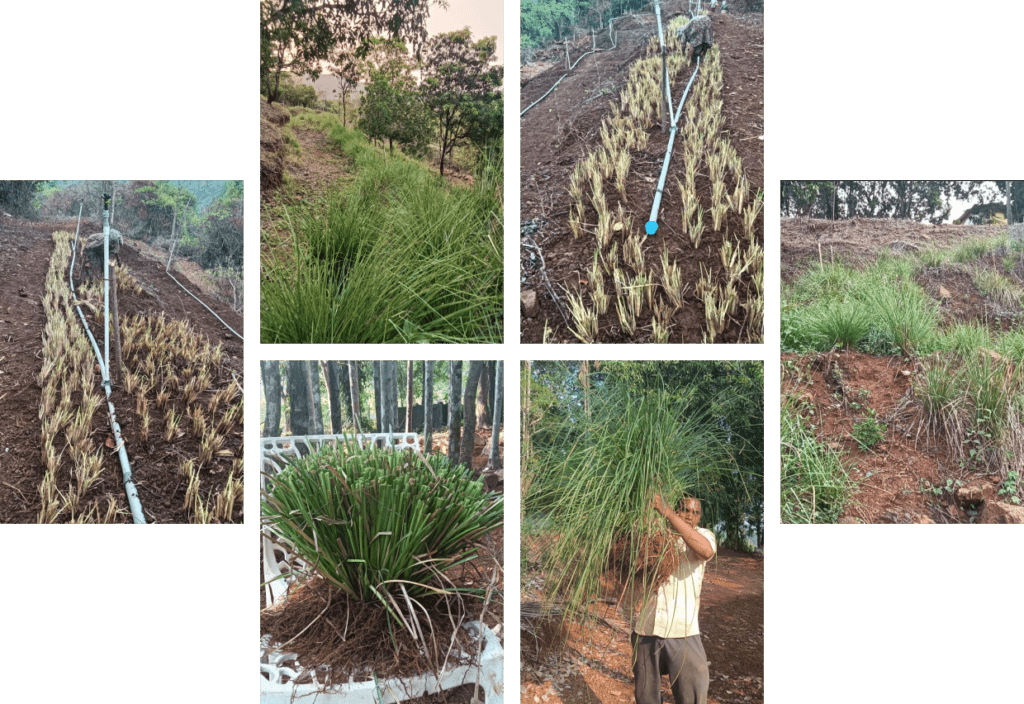
Mayank Kumar, who has around 25 acres of agricultural land near Varanasi, cultivates vetiver, Cim Vridhi and KS1 varieties purely for planting material. He supplies 20 million tillers in a year, primarily for Bio Engineering and root cultivation.
He received the Vetiver Icon 2026 award on 16th April in Delhi at the event – Making India Organic, Natural and Profitable (MIONP)
It was an ideal event to honour a Vetivarian, as it is a key nature-based solution for any Natural Farming initiative.
IVF feels proud of Mayank’s achievement and thanks Krishi Jagran – the event organisers – for conferring this title on him.
Jayalakshmi Balasundaram, a global Neem Ratan awardee, has been practicing sustainable Natural integrated farming for the past 12 years. Here’s her story.
“I moved to the Konkan belt, Shivne, Sangharsh, Ratnagiri district in Feb’26.
Along with the livestock which includes (cows, Donkeys, Goats, chicken and rabbits), we take up timber with fruit trees. PNS sir introduced me to vetiver last year and l immediately incorporated it in our farm mainly for slope restoration.
We have a steep slope of about 100 mt in one part of our farm and a river flowing down, which is the main source of irrigation. This year, we’ll be transplanting the vetiver slips around the coconut, arecanut trees and jackfruit and cashew saplings. Apart from river bed restoration, we took up plantation in the areas where there is grey water discharge.
We had ordered 30,000 slips from Cuddalore to cover a 5-acre area. The challenges faced were long distance transport by train wherein we lost about 10%. Secondly, while planting on steep slopes, the survival rate was 40%. The ones which were planted in shady areas under Mango trees had a comparatively lesser growth rate.
We got lot of insights from Richard Sir, Patanjali Sir and PNS sir. Our future action plan is to use Vetiver as floats on rivers and for slope restoration in river beds near Village Schools and temples, and to also use Vetiver for mulching and as roof top cover for our mud houses.
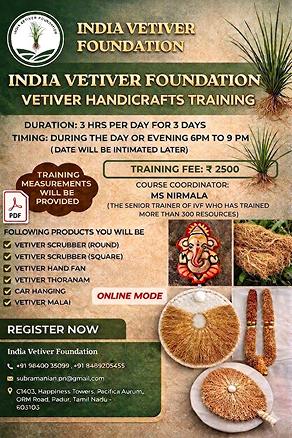
Learn the professional techniques to create high-demand Vetiver products
Join our hands-on training and learn to create eco-friendly products through techniques that are as functional as they are beautiful. Whether you want a new hobby or a small business, we provide the tools and techniques you need.
EVENT DETAILS

Date: First weekend of May | Fees: ₹2500 | Material cost: ₹500
(only if you want materials – excluded from courier charges)
The following materials will be provided through courier.
Vetiver
1kg
Gold colour lace
2 m
Gold colour rope
2 m
Thread
1 (No. 10)
Beads
3 colours
Decorative lace with mirror
– 3 feet
Woollen thread
2
1 Metal rind for
handfan

Learn from Home
No travel needed.

Step-by-Step Video
Clear views of every weave and knot.

Live Support
Get your questions answered in real-time.

Eco-Friendly Business
Start your own sustainable brand.
Registration now open! To register click the below link


TREES Trust: Coming together for the environment
The TREES Trust (Trust for Restoring Environment and Empowering Society) has been actively working towards ecological restoration and community engagement through large-scale plantation drives across various locations. These efforts reflect our continued commitment to sustainable development and environmental protection.
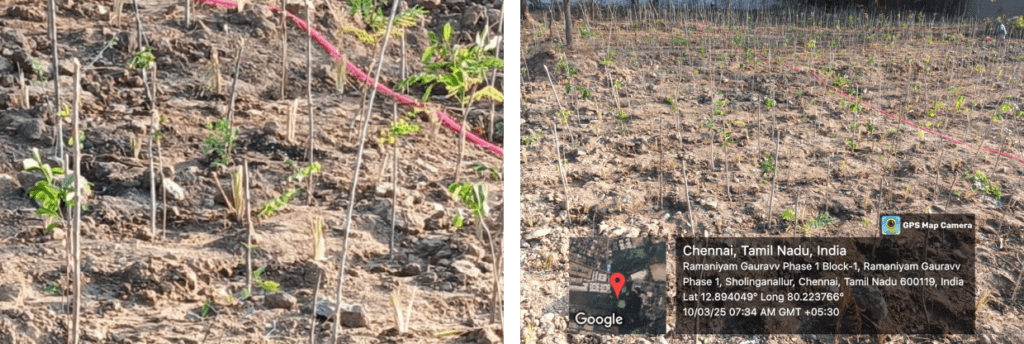
Over the last two years, the TREES Trust (Trust for Restoring Environment and Empowering Society) has successfully organized multiple mega plantation events, focusing on the restoration of native biodiversity. A significant highlight of our initiative is the integration of the vetiver saplings along with native tree plantations. Vetiver grass plays a crucial role in soil conservation, water purification, and erosion control. To date, the TREES Trust has planted more than 10,000 vetiver saplings, marking a major milestone in our environmental efforts.
In addition to plantation activities, TREES Trust has emphasized community participation and awareness. Volunteers from diverse backgrounds, including school children, college students, IT professionals, and staff from Aavin Milk Dairy, have actively participated in these initiatives. Through these engagements, the TREES Trust has also educated participants on the ecological importance of vetiver and sustainable environmental practices.
A notable recent achievement of the TREES Trust was the vetiver plantation drive conducted on June 5, 2025, coinciding with World Environment Day. During this event, approximately 3,300 vetiver saplings were planted at the Aavin Dairy Campus, Sholinganallur, OMR, Chennai, Tamil Nadu, India. This initiative has already demonstrated positive environmental impact, particularly in supporting the functioning and natural filtration process of the Effluent Treatment Plant (ETP) within the Aavin campus.
The plantation carried out by the TREES Trust is expected to deliver long-term ecological benefits, including improved wastewater management, soil stabilization and enhanced green cover. Furthermore, this model of integrating vetiver plantations into industrial and institutional ecosystems holds strong potential for replication in future environmental projects across the country.