The Vetiver Voice
Hon. PM Narendra Modi's "One Station, One Product initiative"
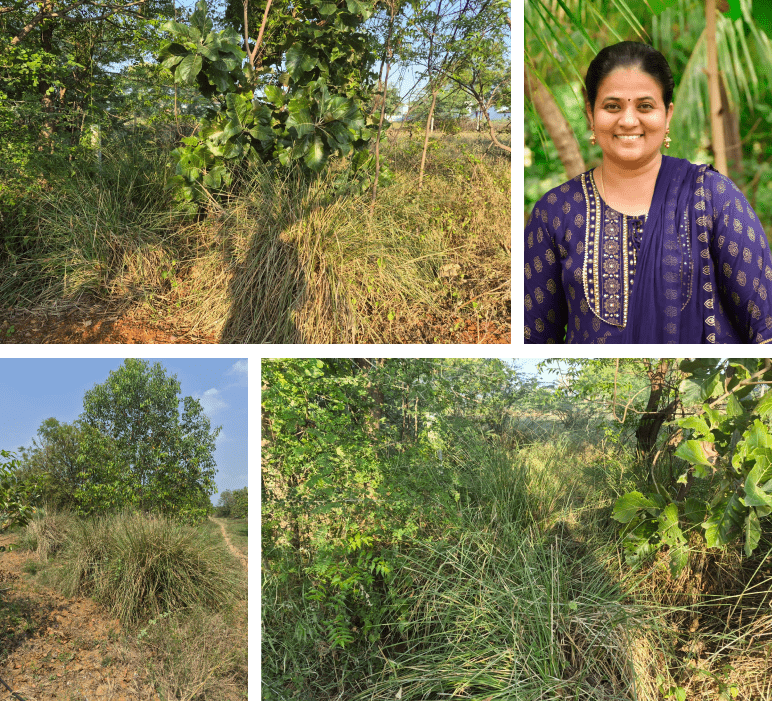
RAMESWAR VETIVER ECO HANDICRAFT & RV AROMA has been registered under MSME Act since December 2023. Under the Mudra Loan offered by Bank of Baroda, Tiruverumbur, Trichy. We are one of the beneficiaries of the CSIR-CIMAP Aroma mission. We had training from FFDC, Kannauj on aromatherapy, Essential Oils, perfumery and making of Agarbatt and Havansamagri. We make value-added products from vetiver and other aromatic crops. We had training from the Entrepreneurship Development and Innovation Institute on Agarbatti and Cosmetic products. We make Agarbattis, Soaps and other aroma products.We have been selling our products in Railway Stations at Nungambakkam, Velachery and Mambalam in Chennai; and Srirangam, Railway Junction and Tiruverumbur in Trichy through the One Station One Product scheme.
The scope of selling these aroma products have been rising through the year. We have reached almost 700,000 passengers through One Station One Product stalls at these railway stations. We have created awareness about Vetiver and other value added products through this initiative.

Innovative Vetiver usage in medicinal applications
Medicinal plants have been used as remedies for human diseases for centuries. The reason for using them as medicine lies in the fact that they contain chemical components of therapeutic value. Plant materials have served as medicines across cultures and throughout time. Knowledge about plants that were found to be the most effective against particular ailments was passed down to the succeeding generations.
Medicinal plants can be a promising source of novel chemotherapeutic agents including cancer. Cancer is the most common and fatal disease responsible for 2-3% of deaths recorded worldwide annually. While in women breast cancer is most widespread and its incidence in Pakistan is reported highest among South Central Asian countries. About 60% anticancer drugs used nowadays are obtained from natural resources such as Vetiveria zizanioides (Nash), belonging to the family Poaceae – commonly known as Khash-Khas, Khas or khus grass in India.
Historically, Vetiver grass was well known in tropical countries for its aromatic and medicinal properties. It is a perennial grass with thick fibrous adventitious roots which are aromatic and highly valued. India is inhabited by a wide variety of tribal populations who dwell in forested areas and depend on surrounding resources for their livelihood. Among the several hundreds plants gathered by tribal populations, khas grass, particularly in North Indian plains, takes a leading role. Various tribes use different parts of the grass for many ailments such as mouth ulcers, fevers, boils, epilepsy, burns, snakebites, scorpion stings, rheumatism, headaches etc.
The present investigation was aimed to assess the cytotoxic potential of aqueous crude extract of the Vetiveria zizanioides root against MCF-7 human breast cancer cell.
Medicinal plants have been used as remedies for human diseases for centuries. The reason for using them as medicine lies in the fact that they contain chemical components of therapeutic value. Plant materials have served as medicines across cultures and throughout time. Knowledge about plants that were found to be the most effective against particular ailments was passed down to the succeeding generations.
Materials and Methods
Plant collection
Vetiveria zizanioides (Nash) roots were collected in Nehru Herbal Gardens from Nehru Arts and Science College, Coimbatore, Tamil Nadu, India. The identification was confirmed with the Botanical Survey of India, Coimbatore, Tamil Nadu, India (Ref. No: BSI/SRC/5/23/2011-12/Tech-1673). The roots were collected; shade dried for a week and powdered using a pulveriser. The fine powder obtained was stored in airtight polythene bags kept at room temperature and used for preparation of the extract.
Click on links below for the Innovative Medicinal Research
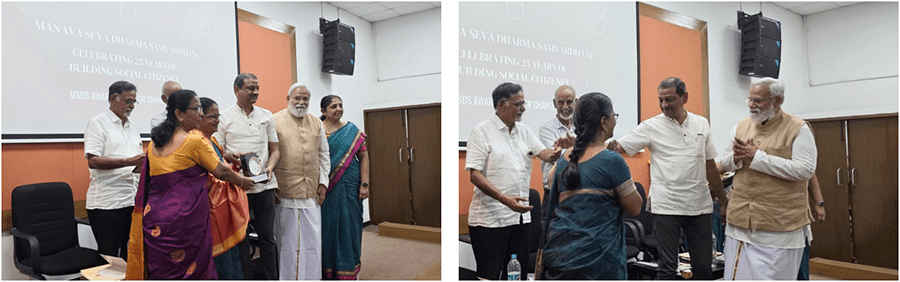
Vetiver: From healing roots to handicrafts
The global demand for herbal medicines has increased significantly, accompanied by growing acceptance of natural therapeutic systems. Classical literature reports numerous plants with medicinal properties, many of which have been traditionally utilized.
India, endowed with extensive biodiversity, represents a major repository of medicinal plants and traditional healthcare. The use of herbal medicines, with their natural origins and fewer side effects, has risen considerably in recent decades. In India, Vetiveria zizanoids is a perennial herb grass that belongs to the Poaceae family. It is characterized by dense fibrous and aromatic roots. Popularly known as Khas, Khus or Khas-Khas grass and ushira in Ayurveda, it is a major source of the well-known oil vetiver, which has been used in traditional medicine and in perfumery for centuries.
The global demand for herbal medicines has increased significantly, accompanied by growing acceptance of natural therapeutic systems. Classical literature reports numerous plants with medicinal properties, many of which have been traditionally utilized.
उशीरं शीतलं तिक्तं मधुरं लघु रुचिप्रदम् |
दाहतृष्णाप्रशमनं रक्तपित्तहरं परम् ||
Medicinal benefits:
- Root decoction helps in digestion, cleaning Ama Visha (toxin produced from undigested food in body). It is useful in treating constipation and bloating.
- Root powder is used to combat excessive discharge of body fluids, like bleeding from a wound, bleeding hemorrhoids, vomiting or diarrhea.
- Stem decoction are used to treat burning sensation as in gastritis, neuropathy, burning sensation in eyes.
- Due to the cooling properties of roots, roots decoction is useful in reducing body temperature, relieves thirst.
- Root decoction remove toxin from body and act as detoxifier. It is used to treat tiredness and fatigue so treat as tonic.
- Tropical use of paste beneficial for wound healing, headache, gout and joint pain.
- Urinary tract disorders and diabetes is treated using stem decoction.
Innovation and patents in vetiver
Classical texts like Bhavpraksha Nighatu describe Ushira as pitta balancing, cooling and relieving burning sensation, making it useful in metabolic disorders.
Based on these principles, the author has developed a novel antidiabetic formulation, currently in the final stage of patenting in India. Vetiver is used as an ingredient in this formulation.
The developed formulation is non-toxic. No chemical preservative or colourants are used in this formulation. In vitro evaluation showed its antioxidant and antidiabetic potential. Therefore, it can be used in pre-diabetic and diabetic patients with associated complications.
Training experience in Kerala
The training provided practical exposure to:
- Processing and cleaning of vetiver roots
- Traditional weaving techniques
- Preparation of eco-friendly products
- Method of drying, preservation and storage
- A visit to an Ayurveda Institute
The program was highly informative and helped in understanding both the traditional knowledge and practical applications of vetiver, where I learned techniques for creating eco-friendly and aromatic products from vetiver roots.
This experience highlighted the plant’s potential in skill development and income generation, inspiring me for entrepreneurship and self-employment.
So, vetiver is a remarkable plant that connects Ayurveda, modern research and sustainable living. From its role in managing prameha to its application in patent stage antidiabetic formulation and handicrafts, it contributes significantly to both health and society.
Vetiver in diabetic care :
In Ayurveda, vetiver is considered cooling, calming and blood purifying. It helps in balancing pitta and kapha doshas which are often associated with metabolic disorders.
For conditions like diabetes mellitus, vetiver is used in the following ways:
- Vetiver infused water (Khus jal) helps in reducing excessive thirst and body heat.
- It supports blood sugar balance by improving metabolism
- It act as a mild detoxifier, helping cleanse the system
- It provides cooling relief, which is beneficial for diabetic patients experiencing burning sensations
Though helpful, vetiver is usually used along with other Ayurvedic herbs and should be taken under expert guidance
Training to use vetiver handicrafts
Vetiver is not only medicinal, but also a sustainable livelihood resource.
Training programs on vetiver handicrafts teach making mats, baskets and much more.
Vetiver planted in a Regenerative natural farm near Pondichery
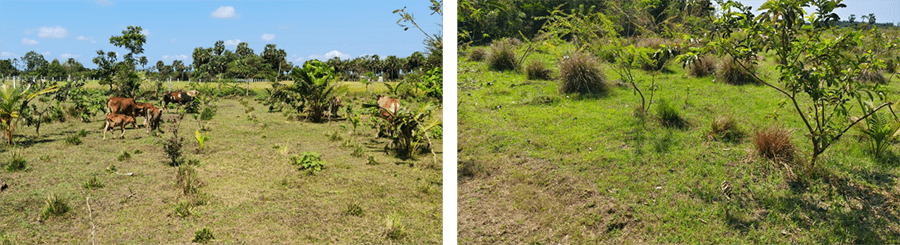
In a food forest consisting of Coconut, Arecanut, gooseberry, Seetha phal, Guava and more plants, Vetiver has been interplanted to provide moisture during summer and enhance fertility.
The farm has a lot of cows and buffaloes which are allowed to graze the weed grass. However they have fed on Tender Vetiver and left the rough leaves in a grown plant.
This saves the farmer the on labour cost of cutting the leaves once in 3 to 4 months
The leaves are good fodder for the animals. You get good quality cow dung and urine for regenerative natural farming – making this an excellent example of circularity.
From Barren Land to a Thriving Farm: The Story of Agastiya Farms
How one woman’s leap of faith and a humble grass transformed 36 acres of drought-prone wasteland into a living ecosystem.*
When Geetha Priyadharsini first set foot on her 36-acre plot in 2016, what greeted her was far from promising. The land was overrun with karuvela maram — the invasive thorny scrub that colonises neglected, degraded soil — with just four lonely tamarind trees standing as proof that something had once grown there. The soil was poor, compacted in places from water stagnation, and stripped bare in others by runoff. The well on the property yielded little water. The wind swept across the open land with force. And rain? The farm sat in a rain shadow region, receiving meaningful rainfall for only three months of the year. For the remaining nine months, it was dry.
Most people would have walked away.
A Different Kind of Farmer
But Geetha was not most people. A decade before starting Agastiya Farms, she had made a decision that raised eyebrows — she quit a stable IT career to take up farming. She didn’t do it on a whim. She backed it with rigorous study, completing a diploma in horticulture from Tamil Nadu Agricultural University (TNAU) in Coimbatore. She came to the land not just with passion, but with knowledge.
Still, knowledge alone couldn’t prepare her for the harsh reality of those first years.
Starting Small, Failing Often
Geetha’s early strategy was sensible — start small, build water harvesting infrastructure first, and let the land recover before pushing it. But the failure rate for plants in the initial phase was punishing. The soil had little capacity to hold moisture. Rainwater, when it did come, ran off quickly or pooled and stagnated rather than soaking in. The ground was almost biologically dead — low in organic matter, low in microbial life, and sealed against roots.
The big question was: how do you fix broken soil in a place where water is scarce and wind erodes whatever little topsoil remains?
The Grass That Changed Everything
The answer came in the form of vetiver — a deep-rooted, drought-hardy grass long known in traditional Indian land management but often overlooked in modern farming. Geetha began planting vetiver across the farm, not as a crop but as a tool — to hold the soil, slow the runoff, and begin the slow work of ecological repair.
The results, over time, were remarkable. The dense vetiver bushes began breaking down the compacted surface layer. Soil that had been hard and impermeable gradually became porous. Microbial activity — the invisible engine of soil health — returned and multiplied. The land started to breathe again.
And something else happened. Trees planted in areas where vetiver had established showed noticeably better survival rates than those planted elsewhere. The grass was acting as a nurse — moderating soil temperature, retaining moisture, and feeding the microorganism community that young tree roots depend on.
Learning to Read the Land
Not every early decision worked out as planned. Vetiver was initially planted inland across the farm, creating dense bushy corridors throughout the fields. But these thick interior hedges turned out to be ideal habitat for snakes and mongooses — a serious problem for the poultry that Geetha was also raising. The wildlife, attracted by the cover and the chickens, became a recurring challenge.
The solution was adaptive: move the vetiver from the interior to the farm’s perimeter fences. This preserved all the ecological benefits — erosion control, soil improvement, microclimate regulation — while removing the conflict with the poultry. It was a small but important lesson: working with nature means paying attention and being willing to change course.
Holding the Rain
In a rain shadow region where three months of rainfall must sustain the land for twelve, water conservation is not just good practice — it is survival. Geetha invested in a large farm pond spanning two acres, designed to capture and store as much of the seasonal rainfall as possible. The bunds of the pond were lined with vetiver, whose dense root systems hold embankment soil firmly in place, preventing erosion during heavy inflows and seepage loss over time.
This pond became the farm’s lifeline — a reservoir that extended the productive season well beyond the rains and gave the trees and plants the water they needed to establish through the long dry months.
A Farm That Keeps Growing
Today, Agastiya Farms is a testament to what patience, ecological thinking, and sheer determination can build. What was once a barren expanse of invasive scrub is now a farm with living soil, established trees, and a water system capable of seeing it through nine months of drought. Vetiver — humble, unassuming, ancient — runs through the story at every turn: stabilising bunds, healing soil, sheltering roots, and fencing the farm’s edges.
Geetha Priyadharsini gave up a career in technology to tend this land. She brought science to it, adapted when things failed, and trusted the slow processes of nature to do what no shortcut could. Agastiya Farms is not just a farm. It is proof that degraded land can be brought back — one vetiver root at a time.