
The Vetiver Voice
Welcome to the February 2026 edition of the Vetiver India newsletter!
This month, we take you to Kannauj, where Aviral Pathak – Founder and Owner of Attar Kannauj is preserving the heritage of Indian vetiver through the traditional Deg Bhapka distillation process. We also have a heart-touching poem on Vetiver by Shri Ramani Iyer. And finally, we give you a glimpse of the Vetiver Grass Basket-Making Training Programme in Idukki, which helped build ecological ownership, traditional craft knowledge and women-led livelihoods.
Happy Reading!
Aviral Pathak - Preserving the Heritage of Indian Vetiver Through Traditional Distillation
Kannauj, Uttar Pradesh, has long been recognised as India’s historic centre of natural perfumery. Among the contemporary custodians of this legacy is Mr. Aviral Pathak, Founder and Owner of Attar Kannauj and the brand Kanyakubj, which is also the old name of Kannauj.
Stepping into leadership at a young age following the untimely passing of his father, Mr. Pathak assumed responsibility for continuing his family’s perfumery enterprise.
“I was very young when I had to take responsibility for the family business. I did not have complete knowledge then, so I devoted myself to understanding the craft deeply — from raw materials to the final distillate.”
His approach has since been defined by a clear philosophy: preservation of tradition alongside responsible modernisation.
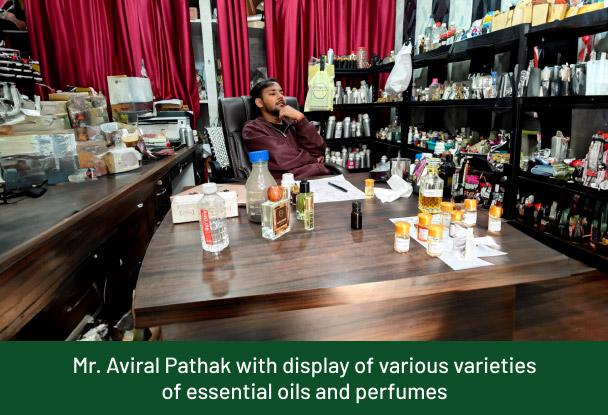
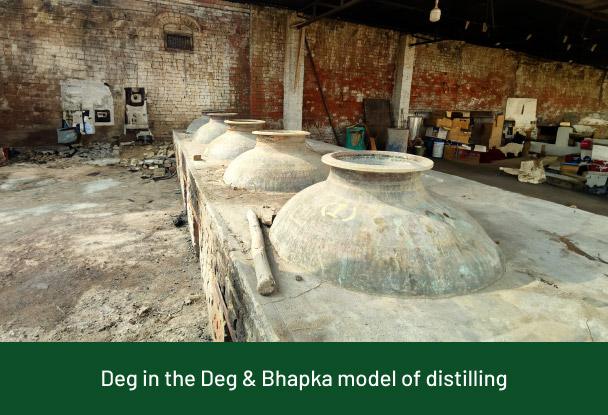
Traditional Deg Bhapka Distillation of Vetiver
At the core of Attar Kannauj’s operations is the Deg Bhapka hydro-distillation method, a technique practiced in Kannauj for centuries and widely regarded as one of the oldest continuous perfume distillation systems in the world.
In the production of vetiver oil (locally known as khus oil), mature vetiver roots are:
- Carefully harvested and manually cleaned
- Sun-dried to optimal moisture levels
- Charged into copper deg vessels with water
- Slowly heated over a controlled fire
- Condensed into receiving vessels (bhapka) for natural separation
This slow and fire-regulated process ensures minimal thermal degradation and allows the preservation of the heavier aromatic constituents responsible for the deep, earthy, woody character of Indian vetiver. As Mr. Pathak explains:
“Luxury is not speed. Luxury is patience. The traditional method allows the oil to express its complete natural profile.”
Quality and Market Positioning
The vetiver oil produced under Mr. Pathak’s supervision is recognised for:
- A full-bodied earthy profile
- Natural smokiness and depth
- Superior fixative strength
- Long-lasting performance in fine fragrance compositions
Mr. Pathak maintains that maintaining the traditional methodology is essential for ensuring superior quality. Today, Attar Kannauj supplies high-grade vetiver oil to perfume houses and fragrance brands across Europe, the United States, Canada & Middle Eastern countries. The oil is valued internationally for its authenticity and distinctive Indian olfactory signature.
Commitment to Authenticity and Industry Development
In addition to manufacturing, Mr. Pathak has focused on promoting transparency and authenticity within the sector. He has previously highlighted concerns regarding adulteration and synthetic blending in certain market segments.
“Consumers are becoming more aware of ingredients. They are seeking natural, plant-based components, and it is important that we preserve authenticity.”
Through structured sourcing practices and adherence to traditional distillation protocols, Attar Kannauj seeks to ensure product purity while maintaining sustainable relationships with local farmers and workers.
Poem by Vetiver Enthusiast Ramani Iyer
Vetiver!
You—a gift of nature to human civilization!
A silent sage, proclaiming that glory lies not in where one blossoms, but in the depth of one’s usefulness!
Born silently in the lap of the earth, you stand firmly rooted even amidst nature’s fury!
Holding attachment (to the soil) as your guiding principle, you withstand soil erosion and raging winds!
You maintain composure under pressure, and provide coolness even in the heat!
Are you the epitome of a peaceful revolution?
Do you teach that humility is beauty, depth is strength, and peace is the ultimate truth?
Setting yourself up with less above the soil and more beneath it—do you live in silent meditation?
Is your goal to cool the body or to calm the mind? Is your purpose to aid digestion or to alleviate stress?
Are humility, depth, and usefulness the three qualities of your life?
In summer—
Are you a challenge to the heat? A defiance against sweat?
Is the water-soaked vetiver mat on the window the air conditioner of the poor?
In spirituality, are you the enemy of negativity? A friend of health?
Is your philosophy to spread fragrance while remaining hidden in the soil, without seeking external light?
Are imagination and craftsmanship the gifts you bestow upon human nature?
In health—for acne, body odor, or oily skin—are you a panacea for all ailments?
A protector against soil erosion, a water purifier—are you a friend of the environment?
Vetiver!
Are you a plant, the very breath of Tamil culture, a lesson in nature’s wisdom?
Are you grass? A plant? The stubborn grip of (soil) attachment?
Ecology, craft, and women-led livelihoods
A three-day Vetiver Grass Basket-Making Training Programme, held at Kuttikanam in Idukki district, Kerala, demonstrated how ecological stewardship, traditional craft knowledge and women-led livelihoods can be integrated into a single, purposeful initiative.
The training was organised by the India Vetiver Foundation and conducted by experienced trainers from the Peermade Development Society (PDS), an institution internationally recognised for its long-standing work on vetiver-based environmental protection and livelihood solutions. Financial support was provided by MSDS, which covered training costs, accommodation, food and travel for nine women from self-help groups. A few additional participants attended at their own expense, reflecting the wider interest the programme generated across regions and professions.
Participants included women from self-help groups, trainers, practitioners, and sustainability enthusiasts, along with the husbands of two women trainees, Poorni and Rekha; Ms Priya Vardheesh from Florida; Ms Raji Rajashekar and Mr A. K. T. Rajashekar from Theni; Dr Sangitha Saini, Professor at Bhagwan Mahavir Institute of Medical Sciences, Sonepat, Haryana; and Mr Kamaraj from Chicago. This diversity contributed to a rich learning environment, enabling dialogue between grassroots practitioners, trainers, academics, and sustainability advocates.
The programme opened with an inaugural address by Fr Sabu, former Director of PDS, who spoke about vetiver’s role in improving soil fertility, preventing erosion, stabilising slopes, and enhancing groundwater recharge. He also traced the origins of vetiver basket-making at PDS to a conscious decision taken nearly two decades ago to retain vetiver roots in the soil while productively utilising the harvested leaves.
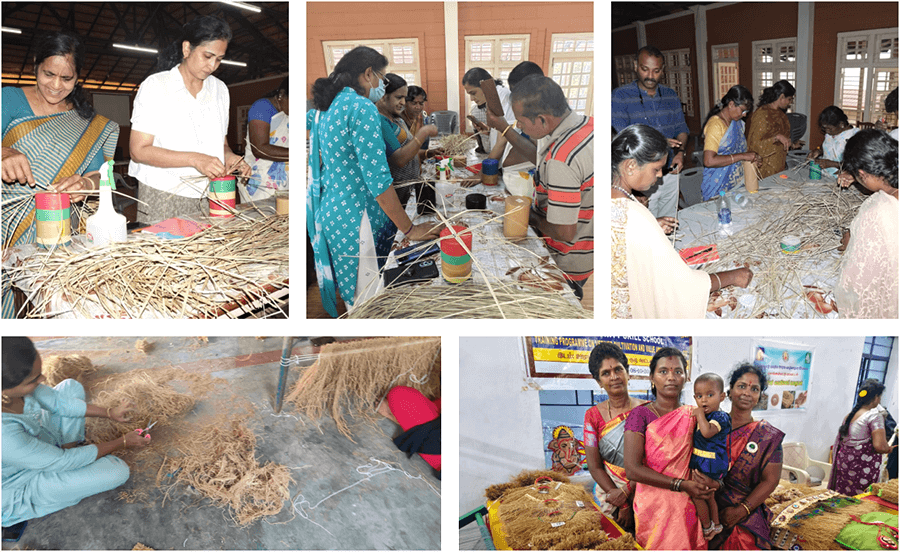
Institutional support for the programme was extended by Mr. P.D. Thomas, Director of PDS. With MSDS support of approximately ₹1 lakh, the programme was designed as a fully residential training, allowing participants to immerse themselves completely in learning. For many women, this residential format provided uninterrupted time, focus, and confidence-building away from daily responsibilities.
The technical sessions formed the core of the programme and were conducted in a systematic, learner-friendly manner. Participants were guided through the entire vetiver craft process—from assessing leaf quality and understanding the correct harvesting season, to boiling the leaves with salt, drying them, and finally weaving and finishing baskets and boxes. Two women trainers from PDS led the sessions with patience and clarity, supported by volunteers who ensured the learning environment remained friendly and inclusive.
Nirmala from Sivagangai district reflected on the structured and practical nature of the training: “The training was very well structured. Participants learnt the entire process—from selecting quality vetiver leaves and understanding the right harvesting season, to drying, weaving, and finishing the boxes.”
A significant dimension of the programme was the presence of Poorni—an experienced handicraft trainer from Pudupattinam village in Thirukkalikundram block, Chengalpattu district. With prior experience in training women in door mats, jewellery, artificial flowers, and decorative items made from locally available materials, she attended the programme with a trainer’s perspective: “The training gave me a completely new perspective. Vetiver was a new material for me, and the process was far more immersive than the usual panchayat-level trainings. This experience has strengthened my confidence and enabled me to train women in my district more effectively.”
Ms Raji Rajashekar described how the training expanded her understanding of vetiver beyond cultivation: “I have always been intrigued by vetiver as a plant. This workshop helped me understand its value-addition potential in a very practical way. Trying my hand at vetiver handicrafts opened new possibilities for my own farming and sustainability initiatives.”
Her husband, Mr A. K. T. Rajashekar, emphasised the ecological–livelihood linkage: “We knew vetiver mainly for its roots and fragrance, but this training showed us how the upper part of the plant can be productively used. Learning how soil conservation can be combined with livelihood creation was a powerful experience.”
Mr Kamaraj, who travelled from Chicago to attend the programme, highlighted the overall experience and care: “I am extremely happy to have been invited for this training. I never anticipated the warmth of the reception or the quality of the arrangements. The accommodation, food, travel and exposure visits were excellent, and the workshop itself was systematic and engaging. These three days at Kuttikanam will remain one of my most memorable learning experiences.”
At the conclusion of the programme, certificates were distributed by Dr Thomas, marking the successful completion of the training and recognising the commitment of all participants.
Dr, Thomas underscored the importance of sustaining such partnerships and acknowledged the exceptional spirit of the group. He said: “We should continue our collaboration in the future for regenerating the ecology and farming. We also enjoyed the spirit of each individual in spite of their diverse background and I have not seen such enthusiasm among participants as we felt from other trainees we conduct.