
January 2026 issue of our Newsletter
The Vetiver Voice
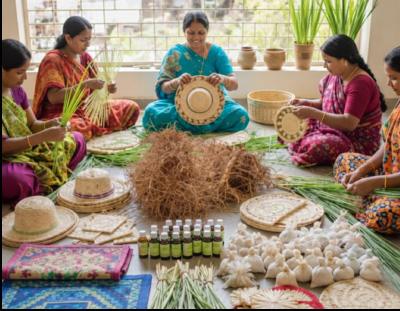
In this issue, we focus on farmer stories in Natural Farming, various applications of vetiver in slope restoration, nursery and material suppliers, and Self-Help Group women producing handicrafts as a means of livelihood creation. We also feature training initiatives on handicrafts.
This edition includes a beautiful story presented as a conversation between a grandson and his grandfather, in which the elder lovingly educates the younger.
We are also pleased to share an article by Dr. Mani Skaria from the USA, a successful citrus farmer in Texas, who explains how vetiver helped save his farm during a severe drought.
We hope you enjoy reading this issue and kindly request your feedback. You are welcome to send us your stories and experiences for inclusion in future issues.
Happy Reading!
Mrs. Subha Suresh - A natural way of farming and soil conservation
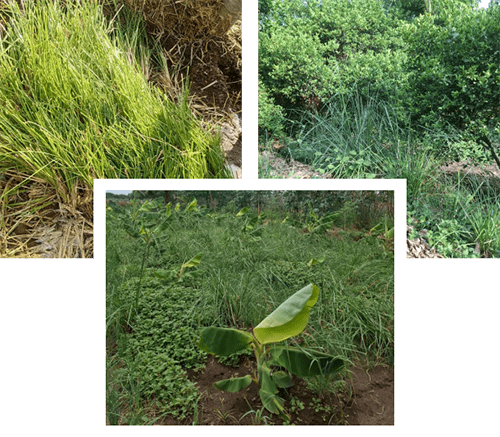
Our farm is located in Chettikulam village of Perambalur district, Tamil Nadu, and spans 18 acres under natural farming practices. We follow a diversified and rotational cropping system, cultivating crops such as shallots, groundnut, maize, greengram, redgram, blackgram, castor, moringa, coriander, and chilli. In addition to seasonal field crops, the farm includes perennial plantations of coconut, lemon, and guava, along with timber trees, forming an integrated and sustainable farming ecosystem.
Eight years ago, we began planting vetiver grass across the farm as a natural measure for soil and water conservation. The deep root system of vetiver has significantly improved soil structure, reduced erosion, and enhanced groundwater recharge, contributing to long-term soil health and farm resilience.
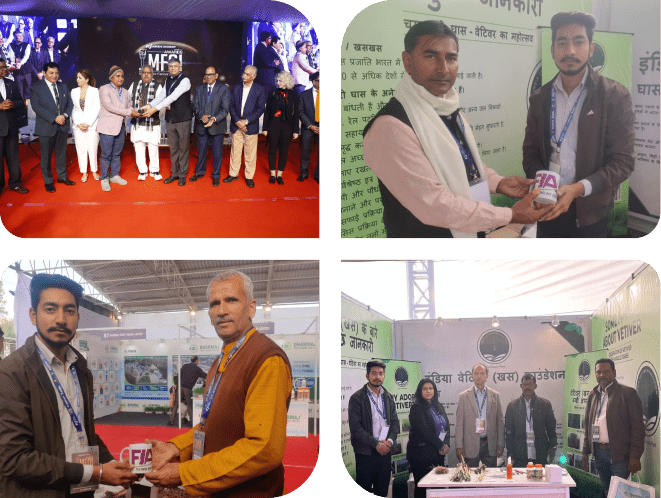
Mayank Mishra - a planting materials supplier who helps keep India safe
Mayank Mishra from Varanasi founded his company ,Making India Herbal Company in June 2021. The objective was to cultivate Medicinal and Aromatic Plants organically .Self help group women numbering more than 30 are employed in the company providing them livelihood. We also employ more than 20 men who take care of planting and maintenance of our farms.
We have 35 acres of land out of which we cultivate Vetiver in 20 acres. Lemongrass, Napier, Citronella, Aloe vera, Brahmi are also cultivated in the balance 15 acres.
Our business focus is supplying quality planting material for various applications of vetiver. Every year, we supply 20 million vetiver tillers
to large slope erosion projects in the National Highways, Railways and in Mountainous regions.
Mrs. Nirmala - promoting modern wellness through a miracle plant
Nirmala, a self help leader and a Senior Trainer of India Vetiver Foundation founded Neela brand vetiver handicrafts. A very innovative product is one which replaces “Naphthalene Balls” with a product from Vetiver, sandalwood powder and a few other herbs . Excellent replacement for the harmful chemical product for book shelves and cupboards NEELA VETTIVER PRODUCTS THIRUPPUVANAM, SIVAGANGAI.
- 8489205455
- nellaproducts565@gmail.com
At Neela vetiver products, we believe that the best solutions for modernwell-being are often found in the roots of nature. We are proud to introduce you to our exclusive range of Vetiver-based products, meticulously crafted to bring the “Oil of Tranquility” into your daily life.
Vetiver is more than just a fragrant grass; it is a powerhouse of therapeutic properties. While many recognize its deep, earthy aroma, its benefits extend far beyond scent.


Vetiver: Keeping you healthy and well
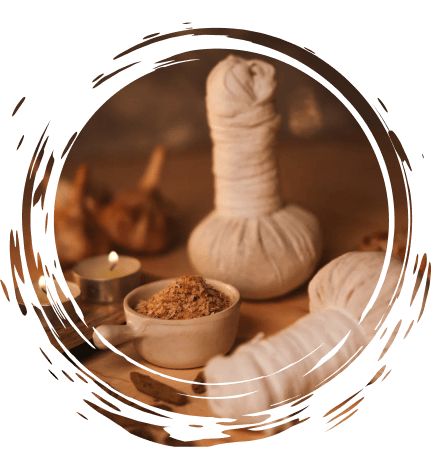
Natural Cooling:
Known as a traditional coolant, Vetiver helps regulate body temperature and soothe inflammation.
Skin Rejuvenation:
Its antiseptic and anti-inflammatory properties help reduce acne, scars, and stretch marks while promoting a healthy glow.
Stress & Anxiety Relief:
The grounding aroma is scientifically recognized for its ability to calm the nervous system, reduce stress, and improve sleep quality.
Eco-Friendly & Sustainable:
Vetiver is a hardy, soil-binding plant, making our products as kind to the planet as they are to your body.
Antibacterial Protection:
It acts as a natural deodorizer and disinfectant, perfect for personal care and home hygiene.
Our Collection: 40 Ways to Experience Nature
We have expanded our passion for this “miracle grass” into a comprehensive line of over 40 unique products. Whether you are looking for skincare, home aromatics, or traditional wellness accessories, our catalog has been curated to meet every need:
Personal Care
Vetiver-infused soaps, vetiver bath powder, vetiver hair shampoo powder, vetiver pure powder to intake, vetiver sarbath ,vetiver chocolate, and face pack powders.
Traditional Wellness
Hand-woven Vetiver bath scrubs, foot scrubs, cooling yoga mats, and eye masks, vetiver bed, pillow, cushion, vetiver neck pillow, backpain pillow, vetiver seatmate.
Home & Lifestyle
Natural air fresheners, car freshner, and aromatic root bundles ,door garland, wall hanging, vetiver napthalene balls, vetiver mosquito killer.
Specialty Items
vetiver water purifier( life knot), vetiver shoe deodorant, vetiver podli, vetiver stream bag, vetiver bouguet, vetiver powder ganesh statue, vetiver linga, vetiver pooja baskets.
We are committed to purity, ensuring that every item in our 40-product range maintains the integrity of the Vetiver root.
We would love the opportunity to share our full catalog with you all.
Shri Lakshminarasimhan Sridhar:
Introducing children to the delights of vetiver
We realised that school, college students and even Youth are not aware of Vetiver the Miracle Grass. The need of the hour is to create awareness and even train them in cultivating this Divine Grass One of our Members Shri Lakshminarasimhan Sridhar very creatively produced a book for children.
A very insightful one on Vetiver called “Vedu & Nachu Thatha“, a beautiful way the Grandfather educates his grandson about Vetiver

Manava Seva Dharma - promoting farming the right way
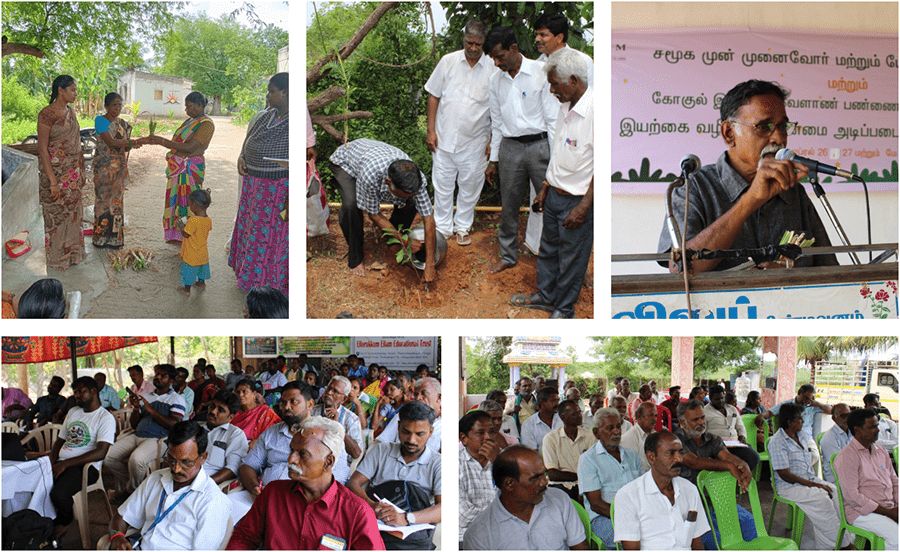
Manava Seva Dharma Samvardhini regularly conducts organic farming training in Taluq headquarters. They introduced as part of the training, a 2 hour session on Vetiver The participants were given 5 vetiver tillers each so that they can plant and witness the growth.
They were also given certificates of participation Around 250 farmers were given an awareness session in 5 locations and the outcome was welcoming.
Most of them were not aware of the benefits of Vetiver.

Vetiver: From Global Roots to Texas Proof
A Photograph That Changed My Understanding
My vetiver journey did not begin with a report or textbook, but with a photograph —and a person. Around 2005, Dr. Lam Duong conducted a controlled vetiver experiment in Vietnam that profoundly shaped how I came to understand this plant.
A single vetiver plant was grown for eight months inside a three-meter-long wooden box with one transparent side. When the box was opened, the roots extended nearly 12 feet straight down—dense, vertical, and non-invasive. This proved vetiver’s ability to stabilize soil, move water vertically, and build ecological resilience beneath the surface. It communicated more clearly than pages of explanation ever could.
Vetiver: From Global Roots to Texas Proof
Dr. Lam‘s Vietnam work demonstrated vetiver as living proof rather than academic theory.
Seeing vetiver through Vietnam’s slopes, soils, and agricultural constraints connected the dots for me. Here was a plant native to India, elevated through royal vision in Thailand, and validated through rigorous field experience in Vietnam. The results were undeniable. And the applications were practical.
A Global Network of Practice
Gradually, I began to see vetiver not merely as a tool, but as a system—one sustained by people as much as by roots. That realization opened the door to a wider global community.
Through the Vetiver Network International, a USA-based organization carrying forward decades of research inspired by Thailand’s royal initiatives, vetiver emerged as part of a worldwide movement linking science, conservation, and lived field experience.
Returning to India: The Source
That global pathway naturally led back to India—the birthplace of vetiver—through The Vetiver Network India, guided by P. N. Subramanian (widely known as PNS) – garded globally as a vetiver guru.
Through this India-based network, I met and interacted with Patanjali Jha and RACS Rao—practitioners deeply grounded in field application, farmer engagement, and landscape restoration. These were conversations about rainfall, erosion, slopes, livelihoods, and how vetiver quietly solves problems that heavy nfrastructure often cannot.
What became clear is that vetiver is sustained through shared stewardship—across India, Thailand, Vietnam, the United States, Africa, South America, and Australia—each contributing knowledge shaped by local landscapes and constraints.
Vetiver, in this sense, is a living network: of people, science, humility, and cooperation.
From Global Learning to Texas Proof
What we are doing in Texas is where global learning meets local proof.
At US Citrus, we integrated vetiver not as a paper experiment, but as a companion plant under real-world stress. We planted micro-budded citrus trees—only 6 to 8 inches tall, with stems barely 4 millimeters thick—directly alongside vetiver. These were young, vulnerable plants that most growers would normally protect with frequent irrigation.
Then came the 2024 Texas drought. South Texas experienced nearly 50 days above 100°F with limited rainfall. Critically, we did not irrigate beyond what nature provided. The citrus survived—and held.
What Changed Underground
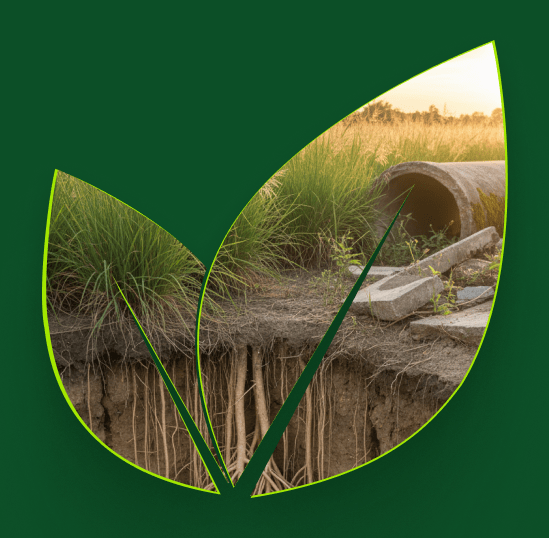
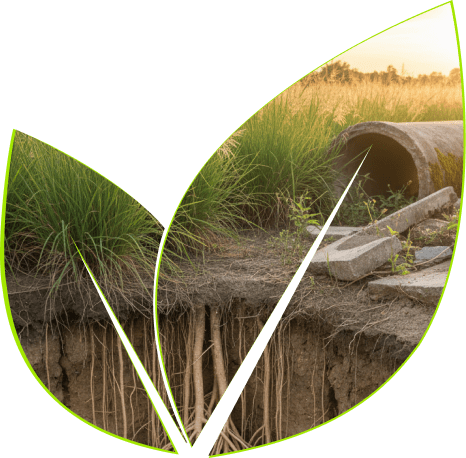
The most important changes occurred beneath the surface. Areas that once held standing water after rain events no longer did. Water moved vertically, drawn deep into the soil profile toward groundwater rather than spreading laterally and stagnating.
Vetiver quietly solved a drainage problem that engineered fixes—concrete, pipes, and channels—often struggle to address.
What Changed Underground
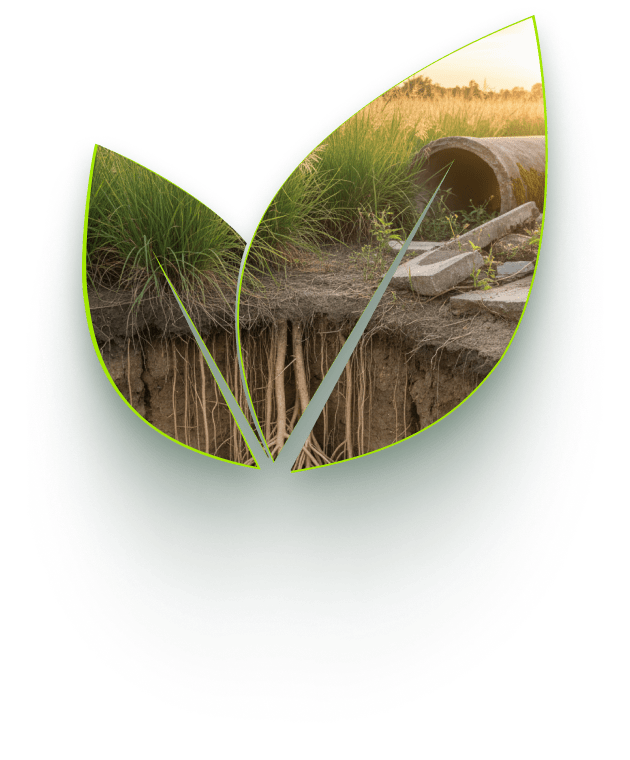
The most important changes occurred beneath the surface. Areas that once held standing water after rain events no longer did. Water moved vertically, drawn deep into the soil profile toward groundwater rather than spreading laterally and stagnating.
Vetiver quietly solved a drainage problem that engineered fixes—concrete, pipes, and channels—often struggle to address.
Unexpected Ecological Signals
Then came something unplanned. In greenhouse areas bordered by vetiver, snails virtually disappeared. Where vetiver was present, snail pressure dropped sharply due to changes in soil moisture, habitat structure, and microclimate. In nearby control areas without vetiver, snails remained a persistent problem.
When we extended this system into the field alongside Persian lime plantings, Vetiver functioned as a biological mulch—suppressing weeds, moderating soil moisture, and reducing competition without herbicides. The implications were immediate and practical, particularly for organic systems.
A System, Not an Add-On
Today, this approach has become our design for new citrus orchard planting. For every citrus tree, we plant two Vetiver slips as companion plants on either side. About two feet away from the citrus plant, we establish a series of vetiver slips along the row. As these plants grow, they supply continuous biological mulch, helping control weeds and protect the soil throughout the planting row. Over time, Vetiver clumps form a living shield that provides:
- Wind protection against prevailing South Texas winds.
- Reduced insect pressure through habitat and microclimate modification
- Weed suppression without chemical inputs
- Improved soil structure and moisture dynamics
- Potential thermal buffering during sudden cold events
What began as a global lesson—from India to Thailand, Vietnam to the United States—has become a Texas-grown strategy rooted in observation, restraint, and respect for biology.
More Than Erosion Control
In Texas, vetiver is no longer just erosion control.
It is an infrastructure made of roots.
It is insurance without a policy.
And it reminds us that resilient systems are often built quietly, patiently, and out of sight.
What we are rediscovering in Texas is something older and quieter: that the most durable agricultural technologies are not always engineered above the ground, but cultivated carefully beneath it.